A Day of Learning at the Marsh
What brought 32 educators, artists, and community partners to the Sweetwater Marsh in June? Our Coastal Educator and Artist Training event, a day focused on providing our network with new connections, educational resources, and much-needed time and space to foster climate resilience through community-centered, place-based learning. Learn how we’re working together to integrate science, culture, creativity, and stewardship into climate education and communication on today’s blog!

“I just arrived to the San Diego environmental education space last year and this felt like the most aligned group of people I have been able to share space with in my time here.”
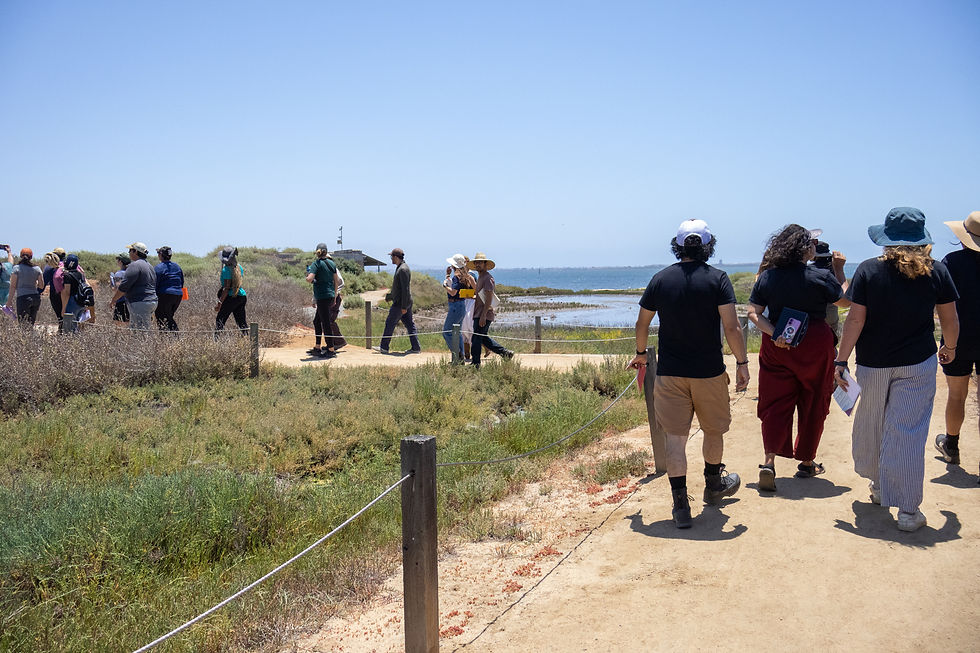
That’s what one educator had to say about our Coastal Educator and Artist Training event, held on June 16, 2026 on Kumeyaay land at the Sweetwater Marsh Unit of the San Diego Bay National Wildlife Refuge. Hosted by the Climate Science Alliance, the U.S. Fish and Wildlife Service, and Tipey Joa Native Warriors, the training invited 32 participants to deepen their relationships with coastal ecosystems through hands-on experiences, shared dialogue, and time spent on the land. Participants included educators, artist fellows, and community partners, all who came together for a day of collaborative learning that connected climate science, Indigenous knowledge, art, and place-based education.
The day began with activities that fostered connections among participants and encouraged reflection on personal relationships with nature before introducing the refuge, the Hear Our Names interpretive signage, and Climate Kids educational resources. Participants then took to the outdoors to help restore habitat and plant native species at the refuge, gaining firsthand experience in coastal stewardship and learning new ideas for connecting students to meaningful conservation action.
Participants shared their appreciation for the opportunity to experience the refuge as learners themselves, spending intentional time outdoors without the responsibilities of leading students. This dedicated time for observation, reflection, and connection with the landscape offered space to recharge and consider how moments of curiosity and wonder can be incorporated into their own teaching.
“[I enjoyed] connecting with other folks and seeing these educational items in a different perspective. I am usually the one who does them for our youth, so it was so nice seeing what they do and be able to experience similar emotions and excitement for these spaces and activities.”
After lunch, participants were led on a guided tour of native plants along the refuge’s trails by Ana Glora (Martha) Rodriguez, Climate Science Alliance advisor and Founder and CEO of Tipey Joa Native Warriors. Interacting with the Hear Our Names signage along the way, Martha shared how the Relatives of the Kumeyaay Coastline collaborative project uplifts cultural perspectives and ecological knowledge to share the significance of local plant species and their relationships with people and place. Participants learned how these place-based perspectives can enrich climate education while strengthening connections between culture, community, and the environment.
“Connecting with other educators moving through the same challenges in outdoor learning…[I appreciated] all the resources that relate directly to outdoor learning in response to climate change and building student connection.”
The afternoon continued with the Climate Kids’ curriculum lesson: Climate Science 101, through which participants explored climate change concepts, regional coastal impacts, and strategies for communicating about climate with care and confidence. This was followed by a native plant resilience activity, showcasing creative ways to investigate the ways local plants adapt to drought, heat, and fire while reflecting on what these resilience strategies can teach us about responding to a changing climate.
“It was great to hear…about the effectiveness of climate science education that frames climate effects and climate action in a local way so students can understand how this affects the area where they live.”
The day concluded with shared reflections on the relationships between climate, community, and native plants, along with discussions about how participants could bring these place-based learning experiences into classrooms, programs, and communities.
The Climate Science Alliance appreciated the opportunity to provide much-needed space for our network to strengthen partnerships among fellow educators, artists, Tribal partners, and resource managers while providing practical tools and inspiration for integrating science, culture, creativity, and stewardship into climate education and communication. We are excited to see the new connections flourish and how our friends and partners will continue to foster climate resilience through community-centered, place-based learning.
Connect to More Opportunities Like This One!
We encourage you to subscribe to our newsletters to receive invitations to participate in more opportunities like this training, straight to your inbox.
Interested in upcoming events?
Be sure to check the box for “An Alliance for You: Events & Opportunities”
Interested in educator resources and Climate Kids updates—and want to know when the new Climate Science and the Coast resources are available?
Be sure to check the box for “Climate Kids”
Support for this training came from the U.S. Fish and Wildlife Service.